
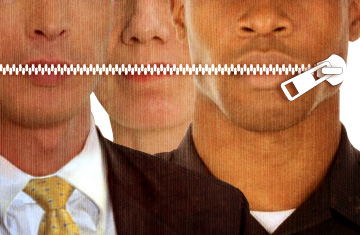

If there is any doubt about how the Bush administration treats government whistle-blowers, consider the case of Teresa Chambers. She was hired in early 2002, with impeccable law enforcement credentials, to become chief of the United States Park Police. But after Chambers raised concerns publicly that crime was up in the nation’s parks, she was rebuked by superiors and fired. When Chambers fought to regain her job through the legal system meant to protect whistle-blowers, government lawyers fought back, and associated her with terrorists. Despite a multiyear legal struggle, she is still fighting for her job.
Whistle-blowers have faced hostility not only under Republican administrations. During President Clinton’s tenure, Bogdan Dzakovic, an undercover security agent with the Federal Aviation Administration, suffered retribution for speaking out about weak airport security — three years before Sept. 11, 2001. Dzakovic was passed up for promotion time and again, and today, he says, he remains consigned to data entry duties for the Transportation Security Administration.
Every year, hundreds of federal workers sound the alarm about corruption, fraud or dangers to public safety that are caused or overlooked — or even covered up — by U.S. government agencies. These whistle-blowers are supposed to be guaranteed protection by law from retaliation for speaking out in the public’s interest.
But a six-month investigation by the Center for Investigative Reporting, in collaboration with Salon, has found that federal whistle-blowers almost never receive legal protection after they take action. Instead, they often face agency managers and White House appointees intent upon silencing them rather than addressing the problems they raise. They are left fighting for their jobs in a special administrative court system, little known to the American public, that is mired in bureaucracy and vulnerable to partisan politics. The CIR/Salon investigation reveals that the whistle-blower system — first created by Congress decades ago and proclaimed as a cornerstone of government transparency and accountability — has in reality enabled the punishment of employees who speak out. It has had a chilling effect, dissuading others from coming forward. The investigation examined nearly 3,600 whistle-blower cases since 1994, and included dozens of interviews and a review of confidential court documents. Whistle-blowers lose their cases, the investigation shows, nearly 97 percent of the time. Most limp away from the experience with their careers, reputations and finances in tatters.
Legal experts and lawmakers say the system is badly in need of reform. In fact, new legislation to strengthen whistle-blower protections has been moving through Congress this year, with strong bipartisan support, and is expected to come before the Senate this session. But in the latest setback to the system, the Bush White House has vowed to veto the legislation, citing among its criticisms a risk to national security.
“Whistle-blowers are treated like a skunk at a picnic, and there’s no excuse for it,” Sen. Charles Grassley, the Iowa Republican, said after being provided with details of the CIR/Salon investigation. Grassley has long sought stronger whistle-blower protections and is backing the new legislation toward reform. “It’s whistle-blowers who can help us truly understand problems at government agencies. They stick their necks out to speak the truth. They don’t take the easy way out.”
“It’s imperative that there are whistle-blower protections for civil servants when they see something that is wrong,” said Lynn Jennings, an attorney who served during the Clinton administration as general counsel for the special whistle-blower court, known as the Merit Systems Protection Board. “They need to know that if they speak out they are going to be protected. Ultimately, it is to save lives, to save money, to save the integrity of the federal government.”
To be sure, some cases brought by whistle-blowers are frivolous. Recent cases included one in which an employee sought protection after reporting missing candy bars at a government commissary. In another case, a worker complained about colleagues using a drinking fountain as a spittoon. One government worker was discovered by investigators to have fabricated his entire complaint. Most such cases, however, are weeded out of the system.
But the apparently legitimate cases — some involving serious issues such as aviation security or tainted meat in the U.S. food supply — have long been undermined by a lack of resources and case backlogs. And legal precedents created by the Federal Circuit Court of Appeals in Washington — the sole appeals court that hears and interprets the law for the special whistle-blower system — have made it virtually impossible in recent years for whistle-blowers to win their cases.
The beginnings of modern whistle-blower protections can be traced to the U.S. Senate floor in April 1951, when the junior senator from California proposed a new law, telling his fellow lawmakers that “it is essential to the security of the nation and the very lives of the people” that employees do not become “a parade of yes-men for administration policies.” The senator was Richard Nixon, and his proposed law eventually stalled. It might have faded away forever, if not for the scandal that shook public confidence in the federal government under Nixon’s own administration two decades later.
In the wake of Watergate, Congress passed the Civil Service Reform Act of 1978. It established the Office of Special Counsel, with a staff of investigators to look into complaints of retaliation against employees who spoke out. The new law also created the Merit Systems Protection Board, the administrative court with a bipartisan panel of three judges, and it assigned a special federal appeals court to interpret the law in the most complex cases.
But year after year, whistle-blowers complaining of retaliation lost their cases. Some faced insidious tactics by their co-workers and superiors.
Joseph D. Whitson Jr. was a civilian chemist in the Air Force who spoke out about superiors falsifying drug test results. His desk was moved to a room in the basement and his job duties stripped.
Vernie Gee Sr. was an agricultural inspector who sounded the alarm about tainted meat in the U.S. food supply and inspectors taking bribes from slaughterhouses. Gee was beaten up by a plant worker during an inspection — and then reprimanded by superiors for fighting.
George Randall Taylor, a chief of police at a Navy base in Bermuda, exposed coverups of rapes on the base. He was then forced into a psychiatric hospital.
Before Teresa Chambers was fired from the Park Police, she found used condoms on her car, and someone pepper-sprayed her office door.
“One of the great tricks in whistle-blowing is to get rid of someone for a reason that doesn’t seem like it was for whistle-blowing,” said Fred Alford, a professor of government at the University of Maryland. “You do all the things you can to get someone to quit, to get them enraged, to get them to act out. Then you can fire them.”
Government managers and attorneys almost always argue that measures taken against whistle-blowers were justified because of bad behavior or poor performance by the employee.
“It is usually not that hard for [agencies] to build up a case against somebody if they want to,” said Elaine Kaplan, who headed the Office of Special Counsel under President Clinton. “They start looking at your e-mails, they start nitpicking you … It is difficult to prove whistle-blower retaliation.”
Details of Chambers’ case reflect that struggle.
Prior to becoming chief of the Park Police, Chambers had a distinguished 28-year career in law enforcement. She was a Republican, was eager to serve the nation in the wake of the 9/11 terrorist attacks, and would be the first woman to lead the force. But her pedigree apparently would no longer matter once her public comments created political embarrassment for the Bush administration.
After 9/11, the administration feared terrorist attacks on high-profile U.S. landmarks, and ordered Chambers to double the number of officers standing guard at icons like the Statue of Liberty and those on the National Mall in Washington. But the Park Police force already faced staffing shortages, and Chambers was forced to pull officers who were patrolling other national parks, leaving those areas vulnerable. Drug dealers soon moved in, and rapes more than tripled. In August 2002, when one of Chambers’ patrolmen was handling a traffic accident with insufficient backup, he was run over and killed.
In the fall of 2003, when a Washington Post reporter contacted Chambers for a story about the growing peril in the parks, she responded candidly. The Park Police, she told the Post, needed twice as many officers and millions of dollars to cover overtime expenses. She said officers had been working grueling 12-hour shifts, and department morale was plummeting. “My greatest fear is that harm or death will come to a visitor or employee at one of our parks,” she said.
Retaliation against her began almost immediately. Chambers’ supervisor, Donald W. Murphy, then the deputy director of the National Park Service, ordered her in an e-mail to never again “reference the President’s ’05 budget under any circumstances” and summoned her to his office. In court documents later filed by Chambers she described how armed federal agents suddenly appeared and surrounded her in Murphy’s reception area, and took away her gun and badge. She was then paraded in front of media when escorted to another building to collect her belongings.
During the course of her case, Bush officials and attorneys attacked Chambers from multiple angles, documents show. One high-ranking official at the Interior Department, which oversees the Park Police, said Chambers was no longer “trustworthy” and that she “potentially endangered large numbers of citizens” by speaking to the media. Murphy, her former boss, said Chambers had been “communicating to the criminal elements,” signaling to them that national parks had become their “free territory to exploit.” A lawyer for the Bush administration asserted that Chambers had made reconnaissance operations easier for “America’s enemies in the world.”
In a recent interview, Chambers questioned whether raising concerns about an understaffed force angered Bush officials who were talking up policies for securing the U.S. homeland. “Was it just a bad day at the White House where I said we needed more officers, when somebody else was standing at a podium saying we’ve never been safer?” asked Chambers, who now teaches part-time at Johns Hopkins University and maintains a Web site documenting her case. “I don’t know.”
One advocacy group that assists whistle-blowers, the Government Accountability Project in Washington, has scrutinized past rulings to determine how whistle-blowers fare. GAP’s pioneering work showed that whistle-blowers seldom win. But until now, no comprehensive study has been done on whistle-blower cases. The Merit Systems Protection Board does not specifically keep track of cases, but using records obtained through the Freedom of Information Act, the CIR/Salon investigation reviewed 3,561 whistle-blower cases filed since 1994, when the Whistleblower Protection Act was last revised by Congress. The cases often traversed a costly and drawn-out series of legal steps prior to a decision. During the Clinton administration, in cases from 1994 to 2000, whistle-blowers won only 3.5 percent of the time. During President Bush’s tenure, from 2001 through June 2007, 3.3 percent of whistle-blowers won. Most whistle-blowers spent several years fighting in court.
“Whistle-blowers are overly confident in the law, but in most cases there is no recourse,” said University of Maryland’s Alford, who has studied the issue. “We have this idea of whistle-blowers from television — from ’60 Minutes,’ from Time magazine. But most whistle-blowers live and die in anonymity.”
“If you are looking at that record and advising [a whistle-blower], I would suggest seeking out a different venue,” said Robert G. Vaughn, a law professor at American University who has written extensively about the Merit Systems Protection Board.
Beth Slavet, a former judge on the Merit Systems Protection Board during the Clinton and Bush administrations, said of the court’s record: “It has a chilling effect. Why would you bring a case that you don’t think you can win?”
The system’s track record has left some whistle-blowers wondering whether their cases were tainted by partisan politics. In the 2003 case of Craig F. Johns, a former special agent for the Department of Veterans Affairs, confidential court documents obtained by CIR and Salon reveal such meddling — by a Republican judge on the court itself.
Johns’ case, which alleged forged training records and anti-gay harassment inside his agency, had crawled through the whistle-blower courts for seven years. In 2003, his case reached its final appeal at the Merit Systems Protection Board. At the time there was a vacancy on the bipartisan three-judge court. Johns’ case was being heard by a Democrat and a Republican — two judges with sharply different interpretations of the whistle-blower law. Beth Slavet, the Democrat, was a former staffer for Sen. Ted Kennedy and had an extensive career practicing labor law. Her Republican colleague, Susanne T. Marshall, had never been an attorney or even graduated college, but had been appointed to the court after a long career as a Republican staffer on the Senate committee for governmental affairs.
The two judges had in fact battled for more than three years over the Johns case, the court documents show, clashing over, among other things, how to address Johns’ claims of anti-homosexual harassment. Discrimination laws do not cover sexual orientation, but Slavet felt Johns’ case underscored such a need and drafted a decision that would grant Johns’ case a new hearing. But Marshall disagreed, and she used a procedural tactic to stall the case until an incoming Bush-appointed judge arrived to replace Slavet, whose term was almost over.
Slavet wrote a scathing memorandum to Marshall in response: “It is fundamentally unfair to the parties and destructive of the process to hold up these cases pending my departure and Mr. McPhie’s confirmation,” Slavet wrote in the memo dated Feb. 25, 2003, referring to the incoming Bush appointee, Neil McPhie. Soon after, McPhie joined the court and Slavet’s term ended. Marshall and McPhie decided the Johns case that August: “Corrective Action Denied.”
It was not the only case that Marshall stalled, documents show. There was the case of Lori A. Sutton, a Department of Justice secretary who alleged retaliation after filing an equal opportunity complaint; and the case of Valerie E. Johnson, a Department of Defense commissary worker who alleged retaliation after exposing the reselling of food items that had been picked at by rats. Marshall and McPhie also ruled against these whistle-blowers.
Marshall is no longer with the court and could not be reached for comment. But the current general counsel of the Merit Systems Protection Board, Chad Bungard, disputed that Marshall’s stalling of whistle-blower cases should be chalked up to partisan politics. “This could be totally innocuous,” Bungard said. “I can’t speculate on what Marshall’s intent was.”
Craig Johns has since left government work and opened a rescue ranch for injured animals in Texas, naming it the Ranch of Last Resort. “It’s very disturbing, to learn about this political interference,” he said recently. “This is why I prefer the company of animals to people.”
Johns’ case, like many others, never made it to the Federal Circuit Court in Washington, the only court that can preside over appeals of whistle-blower cases beyond the Merit Systems Protection Board. Through a series of precedent-setting rulings — which are binding for the entire whistle-blower legal system — the judges on the Federal Circuit Court have interpreted the law in recent years to the point where, as one investigator from the Office of Special Counsel put it, whistle-blowers must “utter magic words” to get protection.
Whistle-blowers are often employees who, during the course of their jobs, notice violations of rules or laws; before going public, they may casually mention the wrongdoing to a boss, or write a memo expressing the need to address a danger to public safety. Teresa Chambers is one example of a person who first raised concerns within her department, to no avail. But legal precedents created by the Federal Circuit Court have rigged the odds heavily against such employees.
One ruling determined that employees will not be protected if the nature of what they disclose is “debatable” by others. Another precedent says whistle-blowers won’t be protected if the coverup they disclose is common knowledge in the office. Another precedent strips protections for whistle-blowers who complain only to their direct boss but to no one higher up the chain. Perhaps the most notorious precedent, known as “Huffman,” says whistle-blowers will not be protected if it is their job to scrutinize safety issues or mismanagement, and they speak out about a coverup — like meat inspectors who discover a coverup of tainted beef in the food supply, or law enforcement officials who speak out about dangers to public safety.
In other words, these legal precedents have made the law more beholden to murky workplace protocols than to the substance of the allegations, even when those allegations concern serious public safety issues and are proven to be true.
“The problem is that no whistle-blower knows a damn thing about whistle-blowing before they do it. You can’t go back and repackage the disclosure to meet the requirements of the law,” said a senior Pentagon official who specializes in employment law. The official spoke on the condition of anonymity, fearing that he would not be protected from retaliation if he were openly critical of whistle-blower protections. “Never have your name in print,” he said.
Another government lawyer, who insisted on anonymity for the same reason, characterized the Federal Circuit Court’s view of whistle-blowers as juvenile. “No one likes a tattletale,” he said. “It’s that simple.”
The Federal Circuit Court’s longest sitting jurist, Haldane Robert Mayer, was appointed by Ronald Reagan. Prior to his appointment, Mayer had been the acting U.S. special counsel — the chief whistle-blower investigator. But Mayer resigned from that position in 1982 after the Office of Special Counsel was accused of holding seminars for political appointees and agency managers — to teach them how to fire whistle-blowers effectively within the confines of the law. The scandal led Congress to strengthen the whistle-blower law, but it did not stop Reagan from appointing Mayer to the bench.
“Judge Mayer is one of the most significant people in the legal system to translate the whistle-blower law passed in response to his own [alleged] abuses of power,” said Tom Devine, legal director for the Government Accountability Project.
Judge Mayer did not respond to an interview request.
In fact, many whistle-blower cases never even make it to the court. They first go to the U.S. Office of Special Counsel, the agency charged with investigating whistle-blower complaints. But the agency has long been considered a failure, due to a chronic backlog of cases, lack of resources and poor leadership. Year after year, the special counsel attempts to justify the existence of the agency by publicizing a handful of whistle-blower cases. “You make examples of high-level and mid-level officials to let them know that they are not going to get away with it,” explained Scott Bloch, the current special counsel, during an interview in September.
But in reality, only 5 percent of employees said they were satisfied with the treatment their case received from the Office of Special Counsel, according to an agency survey released last year. Whistle-blowers find themselves waiting in line behind hundreds of other employees who file complaints each year.
Elaine Kaplan, the Clinton-era special counsel, left office with more than 1,000 cases backlogged. “We received a tremendous amount of complaints there,” she said. “To tell you the truth, we were starting to move cases more quickly toward the end, but no one wants their case to move quickly to a bad conclusion.”
Since Bloch’s appointment by President Bush in 2003, the office has been fighting critics from both political parties, going round and round over allegations of everything from purging backlogged cases to discriminating against gay whistle-blowers. Bloch himself has for two years been under investigation for retaliating against his own employees.
“People have the right to file complaints if they want to and lawyers can say anything they want,” Bloch said when asked about the whistle-blower complaint against him. “But it’s all fiction — all the stuff is made up!”
The new whistle-blower law making its way through Congress, called the Whistleblower Protection Enhancement Act of 2007, is no panacea. But crucially, say its backers, it would allow whistle-blowers to appeal their cases in other U.S. circuit courts, whose judges may have a different interpretation of the law than those on the Federal Circuit Court. And prior to that stage, if the Merit Systems Protections Board didn’t act on a case in a timely manner, whistle-blowers would be able to get a jury trial at a federal district court. Moreover, the legislation would seek to include whistle-blowers in the national security realm, instead of having to rely on more secretive internal procedures at the FBI or other law enforcement and intelligence agencies for recourse.
“These changes would help whistle-blowers appeal negative decisions and hopefully increase the likelihood their complaints of retaliation would be heard,” said Sen. Grassley, who is co-sponsoring the legislation.
Briefed on the results of the CIR/Salon investigation, Democratic Sen. Daniel Akaka of Hawaii, who introduced the legislation, said: “What these statistics show is a real need to strengthen protections for federal whistle-blowers and close loopholes in the law created by judicial decisions that are inconsistent with congressional intent. It is important for our laws to protect the rights of these individuals who come forward with legitimate claims.”
But the Bush administration has vigorously opposed stronger whistle-blower protections. In a confidential e-mail from 2006, obtained by CIR and Salon, the White House registered strong objections to a congressional committee that was reviewing a similar law to protect whistle-blowers drawn up last year, saying the “excessively overbroad definition of whistleblowing … forbids using any common sense.” And President Bush has said he will veto the new legislation moving through Congress, saying in a two-page Statement of Administration Policy that the new law would “increase the number of frivolous complaints and waste resources” and could “compromise national security.”
Sean Kevelighan, a spokesman for the Bush administration, declined to elaborate on the administration’s position. “There is a policy that we let the Statements of Administration Policies speak for themselves,” said Kevelighan.
But for the thousands of federal employees who have descended into the bewildering world of whistle-blowing, there is only deep frustration or bitter resolve.
“My only regret is the stress that it placed on my family, my wife, myself,” said Craig F. Johns, the Veterans Affairs special agent whose appeal was blocked by Marshall, the Republican judge. “I’m still suffering the economic and psychological consequences, but I will never regret speaking the truth.”
“I grew up believing that federal service was an honorable profession,” said Bogdan Dzakovic, the former undercover FAA investigator, who remains a federal employee, unhappily waiting for his pension. “I realized that [blowing the whistle about security problems] was a totally pointless exercise.”
Teresa Chambers, the former Park Police chief, is still trying to appeal her case to the Federal Circuit Court, nearly four years after her firing. “Growing up in municipal policing, it was the expectation that we would be candid with the community that we served,” Chambers said. “I was aghast to find out that [in the federal workforce] candor was not only not expected, it was in this case forbidden.”
