Editor: Mark Schone
Updated: Today
Topic:

Healthcare Reform

Fess up, faux women's clinics!

A Baltimore measure requires crisis pregnancy centers to cop to their ban on abortion and birth control referrals

Under legislation approved Monday night by Baltimore's city council, crisis pregnancy centers that do not offer referrals for abortion or birth control would be required to post signs saying as much. It seems like such a reasonable plea for transparency! After all, these types of centers are infamous for engaging in religiously- and politically-motivated deception of pregnant women -- and yet, if the city's mayor signs the measure, it will be the very first law of its kind in the U.S.

Time and again, we've written about how crisis pregnancy centers masquerade as legitimate healthcare facilities and target young, poor and minority women by offering free pregnancy tests and counseling. In reality, these centers, which are often staffed by unqualified volunteers, provide medical misinformation as a means of coercing women into going through with a pregnancy and, in some cases, to give the baby up for adoption (to a good Christian family, natch). Some clinics have been found to delay pregnancy test results so they can first subject patients to graphic anti-abortion imagery and propaganda.

This measure is bolstered by more than crisis pregnancy centers' well-established reputation nationwide: Last year, the NARAL Pro-Choice Fund sent staff members into 11 Maryland centers in particular to pose as potential patients and reported that "every CPC visited provided misleading or, in some cases completely false, information" about abortion and birth control." For good measure, the clinics also threw in "emotionally manipulative counseling" (for example, one worker told an investigator, "You need to come meet your baby before deciding what to do"). Worse yet, many clinics "purposefully schedule sonogram appointments two-three weeks after the initial appointment to ensure that there will be a heartbeat and that the pregnancy is larger than a grain of rice." (If you're short on outrage today, I highly recommend reading the report in its entirety.)

What makes these centers so pernicious is that they calculatedly project "an aura of medical authority," as the NARAL report puts it, when in reality they are largely "amateur-run." This measure aims to chip away at that facade. Frankly, the legislation could go much farther and actually require them to cop to the totality of their dishonesty -- these clinics should be happy they're getting off so easy.

Lieberman really, really doesn't like the public option

The Connecticut senator rules out any form of the idea, including a compromise proposed by a Republican

In case anyone was still wondering, Sen. Joe Lieberman, I-Conn., tells the Wall Street Journal in an article published Tuesday that he opposes all possible forms of a public option, and he's going to be "stubborn" about it.

The Journal's Gerald Seib asked Lieberman if he could support some compromise form of the public option -- if not the one currently in the Senate bill, which allows states to opt out, then perhaps the "trigger" plan advanced by Sen. Olympia Snowe, R-Maine? The answer, reportedly, was no to all possibilities. Asked whether any form of a public option would lead to his voting to support a filibuster, Lieberman replied, "correct."

On a related topic, in the Daily Beast, Peter Beinart has an interesting article exploring Lieberman's history and his current stance. Beinart asks why, given his record as a liberal on domestic policy, the senator's staking out the position he is, and has this answer:

For close to a decade, he got nearly perfect scores from the American Public Health Association, which backs a single-payer health-care system, and in lieu of that, the “public option.” Now, all of a sudden, he’s so outraged by a public option that he’s threatening to filibuster any bill that contains it. The arguments he makes on behalf of his new position are remarkably weak: He says the public option will raise costs, even though the Congressional Budget Office has said no such thing, and even though logic suggests that by competing with private insurers, a government plan will actually drive costs down. Some have accused Lieberman of shifting right in order to win backing from the insurance industry in preparation for a 2012 reelection run. But, in fact, he gets relatively little insurance money, and Connecticut politicos mostly think he won’t run.

So why is he doing this? Because he’s bitter. According to former staffers and associates, he was upset by his dismal showing in the 2004 Democratic presidential primary. And he was enraged by the tepid support he got from many party leaders in 2006, when he lost the Democratic primary to an anti-war activist and won reelection as an independent. Gradually, this personal alienation has eaten away at his liberal domestic views. His staff has grown markedly more conservative in recent years, and his closest friends in Congress are now Republicans John McCain and Lindsey Graham. For Lieberman, the personal has become political, and it has pushed him further to the right.

Mammogram advice? Meh

A poll finds that few women plan to follow controversial new breast cancer screening guidelines

Women have a simple plan for responding to the unpopular new guidelines on breast cancer screenings: ignore them. A Gallup poll shows that 76 percent of women disagree with the recommendation that women hold off on mammograms until age 50, and a whopping 84 percent of those between age 35 and 49 intend to reject the advice entirely. Women are  going to get their mammograms when they damn well please.

The telephone poll of 1,136 women suggests that the objection to the U.S. Preventive Services Task Force's guidelines arises from a mistrust of the panel's motivations. Seventy-six percent of women believe the decision was based on cost, not science. That's no surprise considering that the results were released amid a contentious debate about healthcare reform and that the recommendations have been poorly communicated to the public. As Cristine Russell writes in the Atlantic, the panel's intent may have been to deliver the message "that individualized, informed decision making should replace blanket guidelines for universal, routine mammography screening of women in their 40s" -- but it failed spectacularly on that front. 

No matter your personal take on the new mammogram guidelines, one thing is certain: There is a critical lack of information on the topic. The Gallup poll found that 40 percent of women believe that a 40-year-old woman has a 20 to 50 percent chance of developing cancer over the next decade, when her actual risk is only 1.4 percent. Clearly, we need to strike a better balance between effective awareness-raising -- like pink ribbon campaigns -- and communicating nuanced medical fact.

Time to go courting Republicans for healthcare bill?

With some Senate Democrats unenthusiastic about reform legislation, votes may have to come from elsewhere

The Senate vote on Democrats' healthcare reform bill Saturday night was close -- maybe too close. Majority Leader Harry Reid won an important victory, no doubt, but he had only the 60 votes needed to invoke cloture and move the legislation to the floor, no more. He may not have all 60 when the next cloture motion, the one to break a Republican filibuster and force an up-or-down vote, comes around.

One member of the Senate's Democratic caucus, Sen. Joe Lieberman, I-Conn., has already said he intends to support a filibuster if the bill includes a public option. And he's not the only one saying something like that -- Sens. Blanche Lincoln of Arkansas and Ben Nelson of Nebraska are also talking defection.

That means that unless Reid can work out some sort of deal, he'll need to look for votes elsewhere: specifically, across the aisle. The New York Times reported Monday that he's already done that; along with the White House, he's courting Maine's two senators, Republicans Susan Collins and Olympia Snowe. Both voted with their party on Saturday, but both have also shown signs that they're willing to defect for the right bill. Snowe, for instance, became the only Republican to have voted for any of the Democrats' proposals when she supported the Finance Committee's version of reform legislation.

And Collins is quoted in the Times as saying, "“I have ruled out voting for this bill, but I still very much want to vote for a bill and that is why I am continuing to have discussions. I still cling to the belief that it is possible for a group of us to come together and rewrite the bill in a way that would cause it to have greater support.”

Senate Dems at odds over health care bill

After Saturday's victory, moderates and liberals clash over future

Senate Democrats on Sunday sparred with each other over how to fix the nation's troubled health care system, the moderates threatening to scuttle legislation if their demands weren't met and the more liberal members warning their party leaders not to bend.

The dispute among Democrats foretells of a rowdy floor debate next month on legislation that would extend health care coverage to roughly 31 million Americans. Republicans have already made clear they aren't supporting the bill.

Final passage is in jeopardy, even after the chamber's historic 60-39 vote Saturday night to begin debate.

"I don't want a big-government, Washington-run operation that would undermine the ... private insurance that 200 million Americans now have," said Sen. Ben Nelson, a conservative Nebraska Democrat.

Nelson and three other moderates -- Democratic Sens. Mary Landrieu of Louisiana and Blanche Lincoln of Arkansas and Connecticut independent Joe Lieberman -- agreed to open debate despite expressing reservations on the measure. Each of them has warned that they might not support the final bill.

One major sticking point is a provision that would allow Americans to buy a federal-run insurance plan if their state allows it. Moderates say they worry the so-called public option will become a huge and costly entitlement program and that other requirements in the bill could cripple businesses.

"I don't want to fix the problems in our health care system in a way that creates more of an economic crisis," said Lieberman.

The sway held by such a small group of senators has annoyed their more liberal colleagues, who could vote against a final bill if it becomes too watered down.

Sen. Sherrod Brown, D-Ohio, said he didn't think rank-and-file Democrats would feel compelled to go that far. At the same time, Brown warned Democratic leaders not to make too many concessions.

"I don't want four Democratic senators dictating to the other 56 of us and to the rest of the country -- when the public option has this much support -- that (a public option is) not going to be in it," said Brown.

The Senate bill would require most Americans to carry insurance and provide subsidies to those who couldn't afford it. Large companies could incur costs if they did not provide coverage to their work force. The insurance industry would come under significant new regulation under the bill, which would first ease and then ban the practice of denying coverage on the basis of pre-existing medical conditions.

Congressional budget analysts put the legislation's cost at $979 billion over a decade and say it would reduce deficits over the same period while extending coverage to 94 percent of the eligible population.

The House approved its version of the bill earlier this month on a near party-line vote of 220-215.

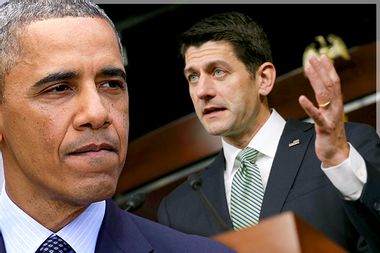
Sen. Dick Durbin of Illinois, the No. 2 Democrat in the Senate, said the health care bill must be passed by the end of the year so that President Barack Obama and Congress can to shift their attention to the economy and improving employment rates.

Such a timeline also would enable Obama to claim victory on a major domestic priority when he delivers his State of the Union speech in January. With one-third of Senate seats up for election in 2010, politics will factor heavily into the outcome of the debate over health care.

Sen. Michael Bennet, a junior Democrat who will be seeking his first full term next year in Colorado, where many districts lean conservative, said he would support the health care overhaul even if doing so means losing his seat.

"The thing that our working families need more than anything else is to end these double-digit cost increases that they're having every single year with health insurance," Bennet said.

Democratic Sen. Chuck Schumer of New York said he believes there are enough votes to include a public insurance option in the bill as long as states were allowed to opt out. To do so, all 58 Democrats and independent Sens. Lieberman and Bernie Sanders of Vermont would have to support it.

Lieberman and Nelson have said they object to the public option. On Sunday, Nelson said he is open to negotiating the provision; he said he would prefer allowing states to opt into the program, instead of having to remove themselves.

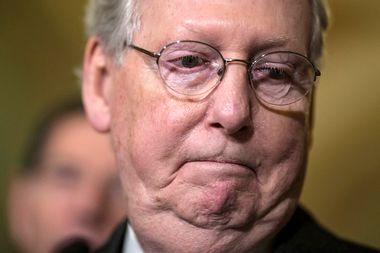
Senate GOP leader Mitch McConnell said the lingering reservations by moderate Democrats indicate that the party's leaders have gone too far. On Saturday, no Republican voted to begin debate on the bill, which they said would cripple industry and drive up costs for the average American.

"I believe there are a number of Democratic senators who do care what the American people think and are not interested in this sort of arrogant approach that everybody sort of shut up and sit down, get out of the way, we know what's best for you," said McConnell.

Brown, Bennet and McConnell appeared on CNN's "State of the Union." Lieberman appeared on NBC's "Meet the Press." Nelson appeared on ABC's "This Week."

----------

Associated Press writers Lolita C. Baldor and Philip Elliott contributed to this report.

Moderate Dem: I might not back next step

A moderate Democratic senator who voted to allow debate over a health care bill says he might not support the bill in its next hurdle in the Senate.

Sen. Ben Nelson of Nebraska says he has serious problems with the bill. He says he wants tougher restrictions on what services taxpayers pay for.

The Nebraska Democrat says he wants an overhaul of the nation's health care system but still needs to be convinced that the Senate bill is the right path to that goal.

On Saturday night, Democrats mustered the minimum 60 votes needed to advance the Senate bill to debate after the Thanksgiving break. After that debate, the bill faces another vote that requires 60 senators in support.

Nelson appeared Sunday on ABC's "This Week."

Page 1 of 96 in Healthcare Reform Earliest ⇒

Healthcare Reform in the news

Loading...

Currently in Salon