

Just after the Christmas holiday in 1973, audiences across America donned their winter coats, braving the cold on a mission to see the film that was making viewers faint in their seats and walk out of theaters trembling: William Friedkin’s horror masterpiece, “The Exorcist.” The film was such an instant, massive sensation that local news stations around the country sent reporters to interview audience members in theater lobbies and prospective viewers standing in long lines stretching far past the box office.
One woman waited for four hours, only to come out of the theater with her voice and legs shaking; another said she drove 100 miles for the experience. In a piece for Dallas’ ABC affiliate, correspondent Patti Burns said: “No one knows exactly what makes a movie a hit. But one thing is for sure: ‘The Exorcist’ has got it.”
In the 50 years that have followed, audiences have become somewhat less susceptible to scares, but no less susceptible to phenomena. If a film can conjure a significant enough buzz, people will want to see it, no matter the reason for the hype. Take “Avatar,” which seduced audiences with its immersive 3D format so intensely that some viewers reported experiencing depression returning to the real world. The buzz around “Hereditary” was aimed at viewers looking to be scared “Exorcist”-style for the new age. Films like “The Brutalist,” “One Battle After Another” and “The Odyssey” are luring some audiences with old-school intermissions and grand formats like VistaVision and IMAX film stock. When it comes to movies, people will buy into a marketing narrative just to experience it themselves, but that alone isn’t enough to call a movie an all-timer. If box office returns and cultivated hype automatically constituted a place in the pantheon of great films, Curry Barker’s runaway horror hit “Obsession” would deserve to be called a new classic — but they don’t, and “Obsession” doesn’t.

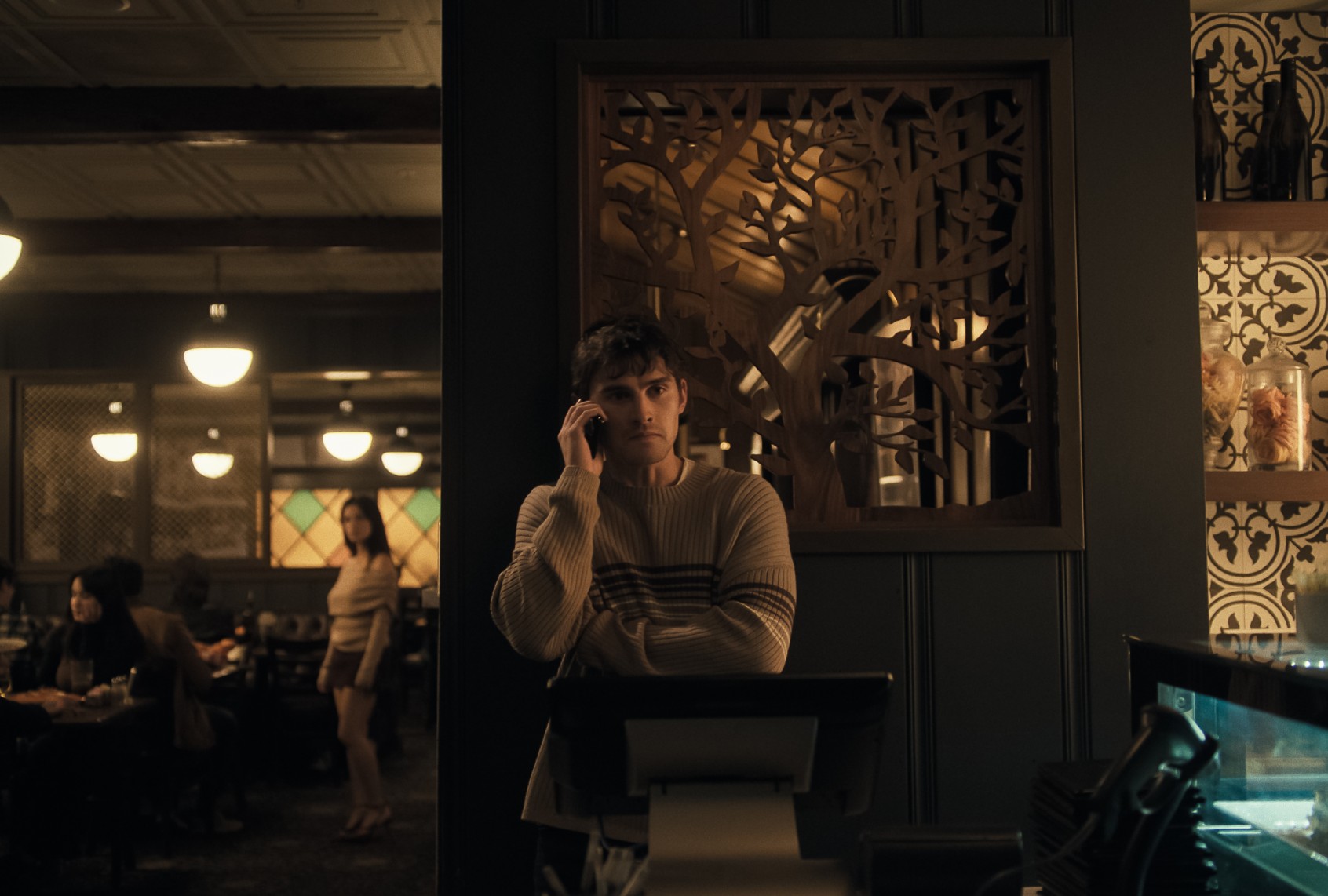
(Focus Features) Inde Navarrette as Nikki in “Obsession”
“Obsession” is a pulpy, prodigious summer hit that checks boxes without posing any new questions. It’s a film that observes without commenting. And it’s that lack of curiosity for the world it exists in that will ultimately keep “Obsession” from competing with the true classics.
Though that hasn’t stopped audiences and critics from making constant comparisons between “The Exorcist” and “Obsession.” And for what it’s worth, there are similarities in the initial responses to both films. After a solid opening weekend in early May, word of mouth turned “Obsession” — made for just shy of $1 million — into a bona fide success almost overnight, with box office grosses climbing as the summer went on. As of this week, the film has surpassed “The Exorcist” in worldwide box-office gross (before inflation). Reddit threads tout the film as a modern classic, measured against the standard “The Exorcist” set, and more formal writing draws worthy comparisons between Linda Blair’s unforgettable performance and newcomer Inde Navarrette’s work in “Obsession.”
Want more from culture than just the latest trend? The Swell highlights art made to last.
Sign up here
But all of these praises are missing a key point in determining which movies can be deemed true classics, something that “Obsession” never quite manifests: a sharp yet unexpected correlation between the film and the world it’s released into. Barker’s film, about a young man named Bear (Michael Johnston) who makes a wish on a cheap novelty toy for his crush, Nikki (Navarrette), to fall in love with him, has occasional flashes of shrewdness. A product of the YouTube generation, Barker has an innate understanding of both technology and how it affects our modern mores. This knowledge supplies his screenplay with a sturdy base on which he crafts his story of parasocial fixation and all its consequences.
But just because a movie is relevant doesn’t mean it’s eternal. “Obsession” is a pulpy, prodigious summer hit that checks boxes without posing any new questions. It’s a film that observes without commenting. And it’s that lack of curiosity for the world it exists in that will ultimately keep “Obsession” from competing with the true classics.
Standing outside that Dallas theater five decades ago, Patti Burns asserted that “no one knows exactly what makes a movie a hit.” At the time, that may very well have been true; in some ways, it still is. Despite the medium’s many scholars and the mathematicians working hard to calculate box office predictions and forecast trends, film is not an exact science. Plenty of movies are predicted to do well — or, like this year’s “The Bride!,” perform at least decently — yet bomb their opening weekend. Others, like “Obsession,” catapult from modest beginnings into an echelon of popularity that not even the academics and historians could’ve foreseen.
But in all of the time since “The Exorcist” dominated theaters for months on end, patterns have emerged — beyond theatergoers’ responses, box office returns or even industry accolades — that point to why some films can be considered classics. “The Exorcist” was one of the first major films of its kind. Friedkin’s movie shifted people’s perceptions about fear and played with longstanding ideas about the nuclear family and religious ideology, themes that were starting to be contested and debated as America moved further from ’50s-era sterility. That the film also had gruesome practical effects, brilliant lead performances and an unforgettably chilling score helped, too. By being both uniquely pertinent and terrifying, it’s fair to say that “The Exorcist” is not just a horror classic, but an all-time classic in the history of cinema.
And if you look at other films that share that distinguished stature — “Titanic,” “Citizen Kane,” “The Wizard of Oz,” “The Social Network,” “Rear Window,” to name a few — it becomes somewhat easier to find the cultural throughline they all share, that irresistibly magnetic aspect that makes them classics. “Titanic” made audiences understand why historic catastrophes are also intimate tragedies. “Citizen Kane” posited that all media moguls are driven by a lust for power that stems from an irreparable brokenness. “The Wizard of Oz” reminded viewers of the necessity for imagination and metaphor at the end of the Great Depression and dawn of a new war. “The Social Network” prophesied a new era of digital media pollution at the hands of an antisocial egomaniac, updating “Citizen Kane” for the world’s next tectonic shift. “Rear Window” measured the consequences of humanity’s voyeuristic preoccupation with the macabre.
We need your help to stay independent.
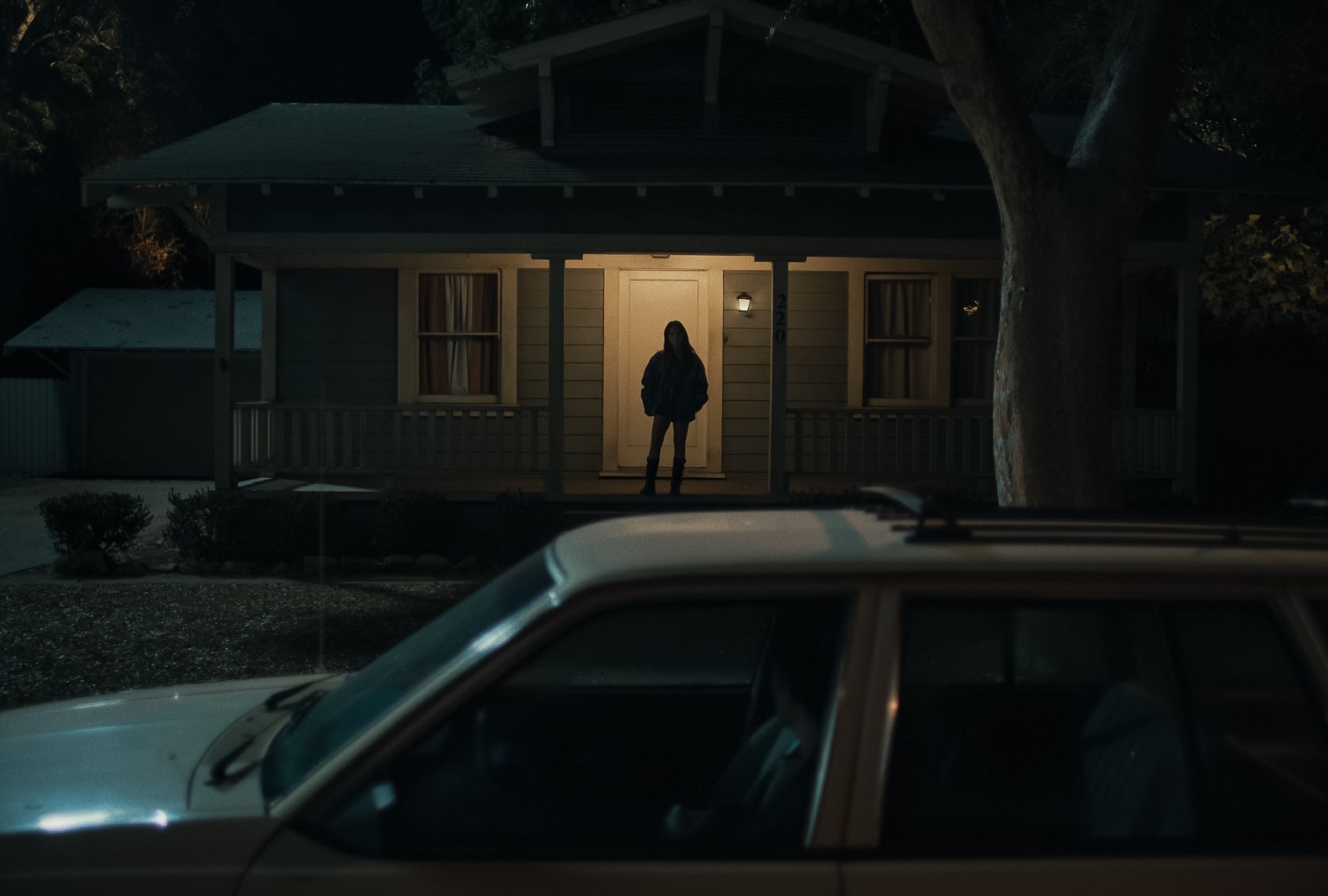
(Focus Features) Inde Navarrette as Nikki in “Obsession”
“Obsession,” on the other hand, wags its finger at projecting a fantasy onto your crush. Doesn’t exactly measure up to the enormity of the classics, does it?
It depends on who you ask. I don’t think it’s entirely unfair to say that a large portion of the effusive response to “Obsession” has been from younger viewers getting their first taste of topical horror gore shocks. This is a movie made by a Gen Z director, geared toward his younger peers, many of whom are navigating romance in the digital age. Of course the movie would be a hit with those who spend a good portion of their time online. And given that so much contemporary movie marketing incorporates Letterboxd reviews, social media reactions and those 30-second ad spots where nightvision cameras capture terrified young viewers jumping back in their seats — a move “Obsession” also utilized — Barker’s film had the youth viewership locked up. From a distance, the movie has the makings of a classic. But a closer look quickly reveals that “Obsession” is a classic for the digital era, which is to say, a movie whose “classic” status is as ephemeral as any internet trend.
“Obsession” wags its finger at projecting a fantasy onto your crush. Doesn’t exactly measure up to the enormity of the classics, does it? It depends on who you ask.
“Obsession” is certainly entertaining, which helps bolster it in the audience’s eyes. It boasts two great lead performances, and its shoestring budget makes the entire production all the more impressive. But clever craftsmanship and a talented team aren’t enough to call something timeless. Barker’s screenplay is sorely lacking the imagination and ambition needed to stake its place among the true classics, horror or otherwise.
Throughout the film, as Bear witnesses the violent repercussions of his tossed-off love wish, Barker continually gestures at the story’s significance. It’s hard to date in a world where everyone makes an image of themselves online that isn’t exactly true, and yet, that image remains the one doe-eyed suitors like Bear opine. Duh. If that were an innovative idea, we’d have been worshipping at the heels of last year’s equally topical yet no less trite sci-fi horror “Companion.” It’s not enough for a film to explain its meaning; it must also say something about that message and its broader significance to stare down the “classic” label. “Obsession” never manages to say anything that hasn’t been said in five more interesting ways by other recent films, several of which were released this year.
Be it measured by box office gross or word of mouth buzz, popularity isn’t enough to define a classic. No one outside the Marvel fan ecosystem is arguing that “Avengers: Endgame,” one of the highest-grossing films of all time, is a cinematic masterpiece on par with the all-time great classics. And yet, “Obsession” is sticking in those conversations, even generating some light award buzz way ahead of Oscar season. This isn’t a bad thing, per se. I found “Obsession” to be somewhat misogynistic in its execution, but I don’t think its popularity is a bad thing at all. If anything, it’s great that the film has people talking, excited to go to the movies again after too many years wondering if theaters could survive the rise of streaming.
But popularity isn’t enough to define a classic. And though a film’s contextual significance is an important part of determining what is and isn’t a timeless movie, applicability isn’t everything, either. The fact is, only time can cement a true classic. For all its immortal ideas and all those outsized news reports of people fainting, “The Exorcist” could’ve faded from memory if so much of what came after didn’t prove to be a cheap imitation. Perhaps the same will be true with “Obsession”; Curry Barker’s copycats will try and fail to interpret the trials of dating when personality is a facade, and I’ll be left eating crow. But judging by Barker’s shallow screenplay, I doubt that it will be too long before someone digs deeper, striking an unassailable, solid-gold classic.
“Obsession” is now streaming on Peacock.
Read more
about movies that deserve the “instant classic” label
