
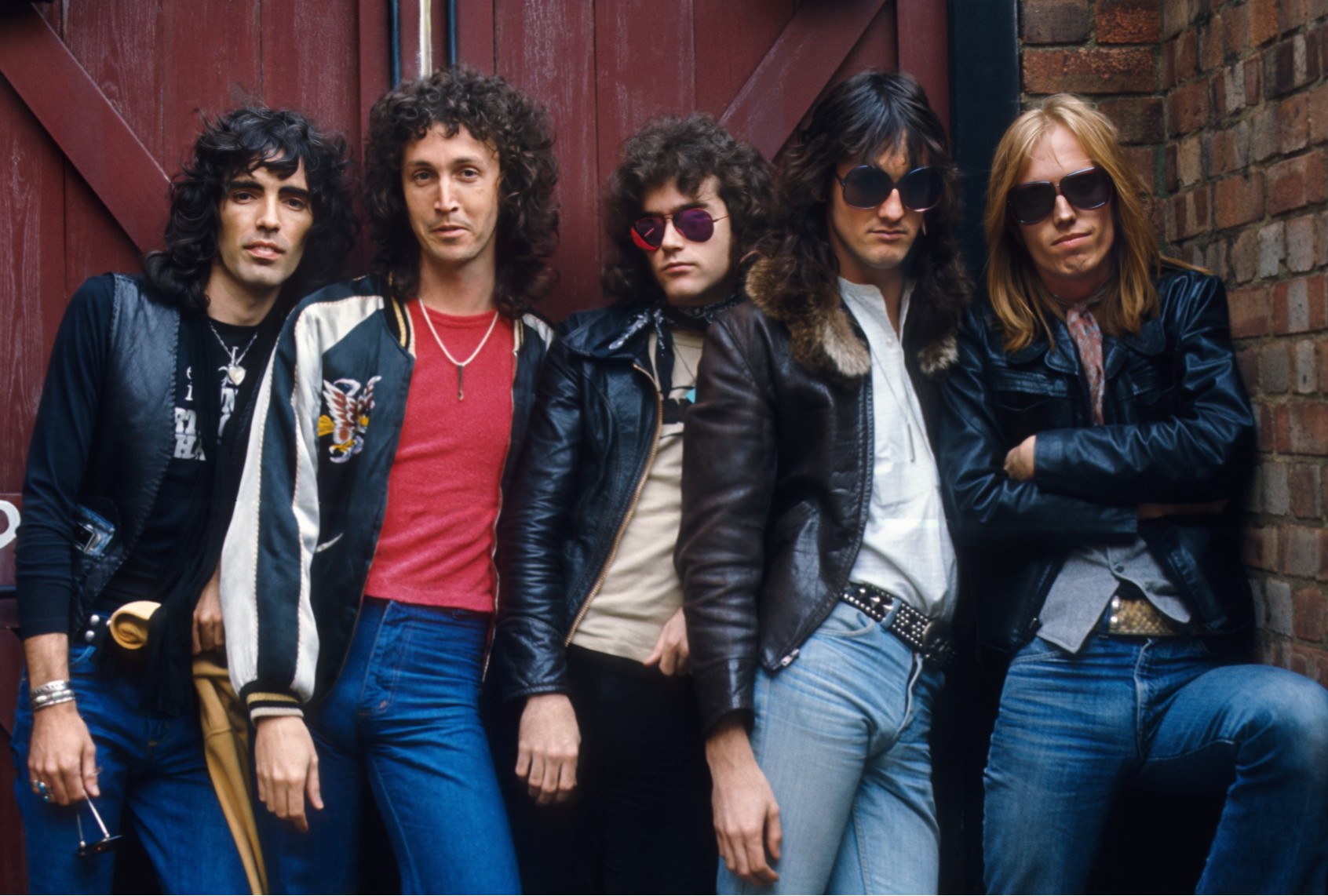

Two great box sets being released for the holiday season from Tom Petty & the Heartbreakers and The Who showcase different approaches to exploring an artist’s back catalog with strong results on both sides. “Origins 1971-1978” chronicles not just the Heartbreakers’ first two albums but also documents the journey that brought them there, while “The Who By Numbers 50th Anniversary Edition” documents the band’s seventh album in a more traditional box set presentation. Both of the releases successfully accomplish their goals and deliver a worthwhile experience for interested listeners, but follow different paths to reach their respective sonic destinations.
“It’s not Tom Petty good.” That’s how Adria Petty described the standards against which decisions were made about what to include and not to include in the outtakes record. “Could this be any band? If so, it’s not in there . . . it’s gotta be something that really adds to the canon or we’re just detracting from the canon.”
In the case of the Petty box set, the records at its heart are the newly mixed and remastered editions of the first two albums: the eponymous first release and record number two, “You’re Gonna Get It!” Then there’s “Live from the Record Plant,” originally broadcast on KSAN-FM in 1977, a DVD of the band’s appearance on the BBC’s “Old Grey Whistle Test,” and finally (and most importantly for this release) a disc of unheard tracks: “No Sleep Til L.A.” and “The Cut Out Bin.” (On the LP edition of the box, the latter two are separate albums, but on the CD-only version, the two are consolidated.)
Rounding out the set is a Blu-Ray with hi-res stereo, Dolby Atmos and 5.1 immersive mixes, and importantly, a full-color 46-page “fanzine” called “Heart Attack” that serves as the liner notes for this box, with photographs, essays, interviews and commentary from members of the surviving Heartbreakers. There are other editions with additional advanced artifacts like posters or simulated Polaroids — my favorite is probably the “Punk to New Wave” trading cards — but if you’re in the target market for those kinds of fun treats, you’ve probably already ordered your copy.
What’s notable about the unreleased music featured on “No Sleep Til L.A.” and “The Cut Out Bin” is that it isn’t just a simple compilation of demos and rough takes in a logical order of some kind, but instead is deliberately curated into the shape of an album. It’s intended to convey the journey Petty and the band took to get to the place where they’re going into the studio to record that first record, capturing tracks from the Mudcrutch era (Petty’s pre-Heartbreakers band that also featured future Heartbreakers Mike Campbell and Benmont Tench) as early as 1971 and then as the Heartbreakers in their early days, learning to work in the studio in L.A. and in Tulsa, where their label Shelter Records sent them to learn how to make a record instead of running the meter on a L.A. studio.
The outtake record isn’t trying to fabricate something that doesn’t exist or inject fiction into the Heartbreakers legend, but rather, to show you how the band evolved from a bunch of kids in Florida who picked up and went out to L.A. to seek their rock ‘n’ roll fortunes on a wing and a prayer into a band that would end up being inducted into the Rock and Roll Hall of Fame. It’s expanding the legacy, not rewriting history.
“It’s not Tom Petty good.” That’s how Adria Petty, who oversees Petty Legacy, the business concern that’s handling her late father’s catalog, told Salon as she described the standards against which decisions were made about what to include and not to include in the outtakes record. “Could this be any band? If so, it’s not in there . . . it’s gotta be something that really adds to the canon or we’re just detracting from the canon.”
And the collection absolutely burnishes the canon. It’s hard to listen to the selection of music and understand how any music business professional didn’t think this band had serious potential. There’s so many standout tracks: “Parade of Loons,” which opens the record, from the great rock ‘n’ roll tradition of writing a song from the perspective of watching the craziness unfolding around you is borderline new wave, but it also isn’t — it’s easy to understand why an industry struggling to understand the new guard needed to figure out where these new guys fit, exactly — and perusing some of the photos included in “Heart Attack” you can extend some grace on that front, because — as Adria Petty laughed, “These are not guys you want to date your daughter, you know?” But as you learn from some of the news clips included in the booklet, Petty did not want to be co-opted into anyone’s movement or limited by any genre.
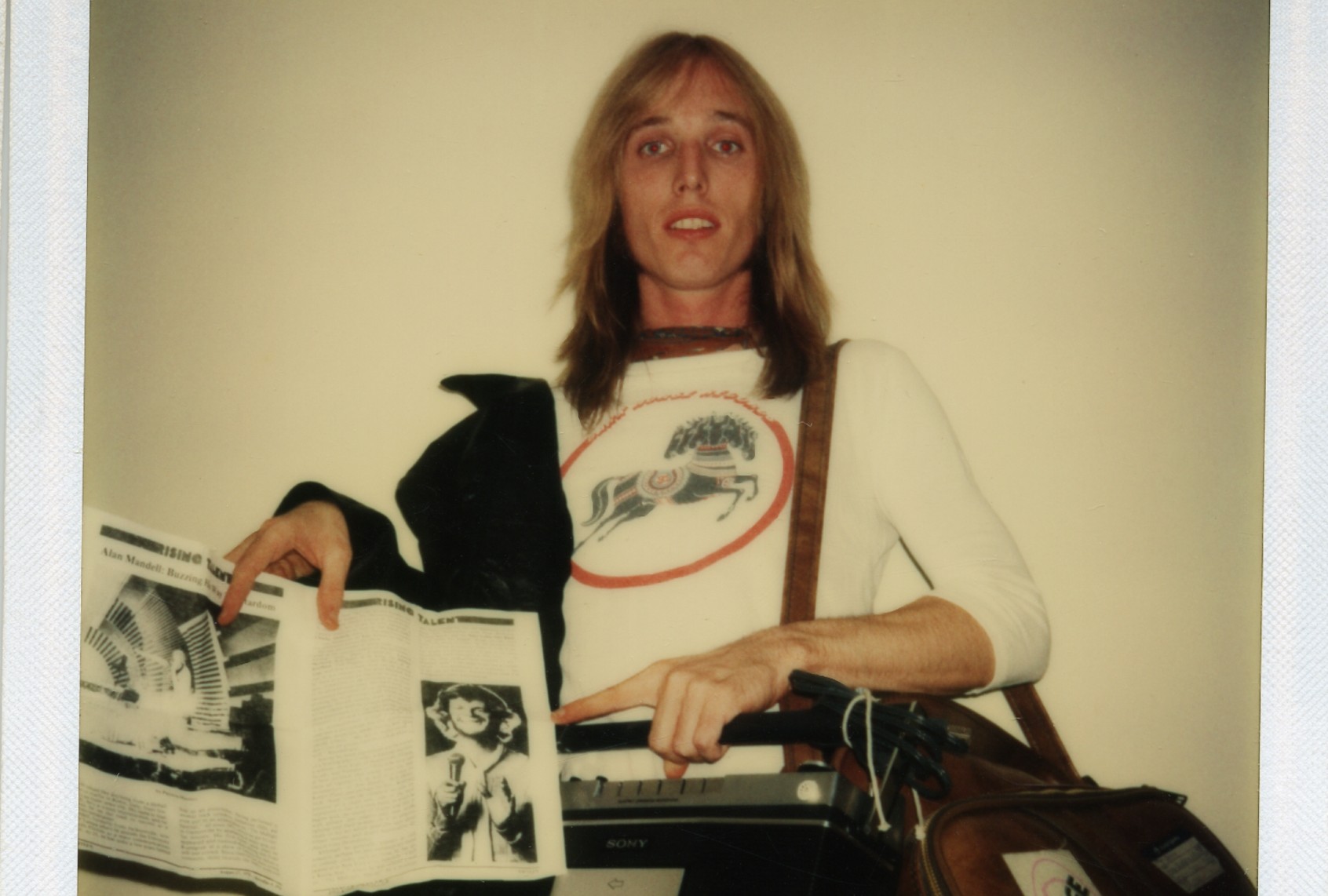
(Stan Lynch) Tom Petty
“You’re Gonna Learn” is reggae-influenced at a time when that wasn’t a widely known, let alone embraced, genre in American rock, and they manage to pull it off without embarrassing themselves. “Up In Mississippi Tonight” could be an outtake from “Exile on Main Street.” There are also a couple of earnest and successful Dylan homages: “Wild Eyes” and “I Can’t Fight It.” If you’re going to borrow, borrow from the best (and from a guy you’re going to be on the road backing in 10 years).
Then there’s “Unheard Kind of Hero.” This is a song that Heartbreakers keyboardist Benmont Tench had previously mentioned as a song he saw the band perform before he was in it, and how he was astounded that a band in Gainesville, Florida, was writing original material like that. In “Heart Attack,” Tench offers, “I was following Mudcrutch around because they were so good, and they played a lot of really cool covers and they played some stuff of their own,” he remembers. And when he heard “Hero,” he asked a friend working for the band who sang it originally. When he was told it was an original, his reaction was, “OK, good lord. Because if you listen to that, whether he was 17 or 19 when he wrote it, the storytelling in it is the beginning.”
The box set is configured to bring the listener into the story, opening with the outtakes before taking you to the officially released albums, then live radio show and then, finally, the 1977 “Old Grey Whistle Test” performance. But I’d like to make the case that you should begin with the OGWT performance because it is utterly electrifying. Anglophiles are already familiar, but in case you’re not, the “Old Grey Whistle Test” is a legendary BBC music program that was the opposite to “Top of the Pops” in that its focus was on albums as opposed to hit singles. But this isn’t an OGWT where a band plays a couple of songs; this was one of their special editions where the band gets the full show. So this is a 40-minute performance by a band that was already famous and well-liked in the U.K., a status they were still fighting to achieve back home.
Want more from culture than just the latest trend? The Swell highlights art made to last.
Sign up here
They’re dressed in black (Benmont Tench rocking a red shirt underneath his suit jacket), Petty looking more like a gunslinger, Ray-Ban aviators and studded guitar strap, Stan Lynch singing harmony vocals over Petty’s shoulder, Mike Campbell dropping guitar riffs and solos without breaking a sweat, Ron Blair sharing the center mic for harmony vocals but otherwise staying low-key back against the drum riser. It’s a time machine back to 1977, with camera work more evolved than we’re used to seeing because it was a TV show about music, not a variety show that featured a band. The colors are a little over-saturated, but people who are used to watching archival rock ‘n’ roll clips won’t be phased. The most jarring element is whenever the camera cuts to the audience, who look like they’d rather be anywhere else. A U.K. source shared that this was because this wasn’t an audience of Tom Petty fans but rather random people who’d put in for tickets and wouldn’t have been encouraged to be enthusiastic. Petty gets his revenge, though, at the last number. (No spoilers!)
The Who box sets are intended to be complete documents of individual records. So there’s the disc of the remastered album (which sounds fantastic), then the initial Townshend demos.
“The Who By Numbers” was released in 1975, but this is still being declared a 50th anniversary artifact. It features 92 unreleased audio tracks, a recording of the band live in Swansea in 1976, the requisite Atmos and stereo mixes, and a video of the full concert of The Who at the Silverdome in Pontiac, Michigan, in 1975.
Also included is what has become a trademark for the band’s reissue sets, a gorgeous full-color 100-page book of liner notes, interviews, lyrics, photographs and other assorted documentation. Even if you buy the CD box, you’re still getting the full-sized book because they put the CDs into an album-sized enclosure. The archivist this time is Andy Neill, one of the two names you want to see behind a Who reissue.
The Who box sets are intended to be complete documents of individual records. So there’s the disc of the remastered album (which sounds fantastic), then the initial Townshend demos. Townshend was approaching 30 when he began work on the songs for “By Numbers,” and he was in the middle of a number of personal dilemmas, as well as struggling with his and the band’s place within rock ‘n’ roll: “I felt detached from my own songs,” he confesses. He also rued the fact that he felt he owed his best material to the band, instead of being able to pursue more of a solo career, which all of his bandmates had done. Townshend’s “Who Came First” came out in 1972, but there hadn’t been anything since.
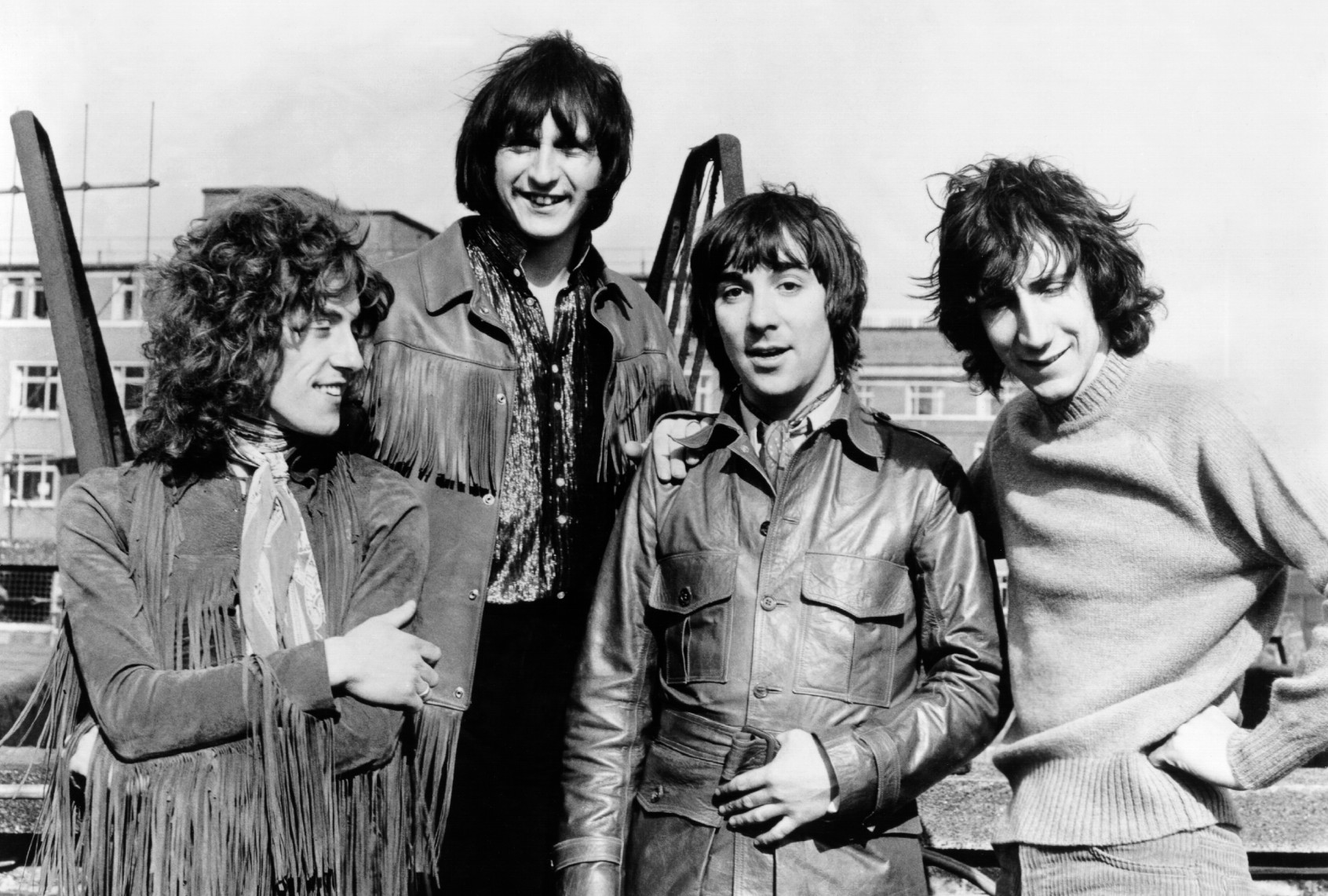
(Michael Ochs Archives/Getty Images) The Who, 1975
The demos are lovely, ethereal sketches, documenting Townshend breathing life into his creations for the first time. There are two demos of “Keep Me Turning,” which didn’t make the cut and we wouldn’t hear until it appeared on “Rough Mix,” the warm and affectionate project he recorded with Ronnie Lane of the Faces two years later. A fun game is to take the Townshend demo of “Slip Kid,” where he’s kind of half-speaking, half-singing, and then compare it to Daltrey’s delivery on the finished version, which is the one song from this record that was built on the original demo. (This is a release that you’ll want the good headphones for.) The highlight is probably “How Many Friends,” which is the heartbreaker on the album; Daltrey’s read of it nails the pathos, but this version makes you wish that Pete maybe hung onto it for himself.
Up next is “Tracking Sessions,” which are initial loose takes with the whole band, but not finished vocals. It’s basically how the band taught themselves the new material, and it includes listings like “Ramport Jam” where they (sans Keith Moon, still making his way back to the U.K. after hanging out in L.A. and working on his solo record) fart around on a variety of instrumentals and a Faces song. This lasted about half an hour, but we’re getting only eight minutes; given the nature of the release, just give the fans the entire unedited mess. Throughout the sessions, you hear the band members making jokes and laughing; you hear Glyn Johns in the control room offering his thoughts; you hear Pete Townshend complaining about not being able to obtain a suitable breakfast. This stuff is gold.
Whereas the Tom Petty box set is intended to show you how they got to the first two albums, this release is trying to show you why this was the record between “Quadrophenia” and “Who Are You.”
There are also lovely early run-throughs of “Imagine A Man” with a solo Townshend on acoustic and Nicky Hopkins on piano, and similarly, “They Are All In Love” (a song that Daltrey did not initially want to sing) is also offered solo Pete. A prototype of “Blue Red and Gray” is here as well, thanks to Glyn Johns’ insistence: “I find that the hardest thing for me to do as a writer is to express optimism, general warmth and a feeling of good will to all men in a song,” Townshend said. “It feels trite and I hate it. That song, ‘I Love Every Minute Of The Day’ . . . is a prime example. Glyn Johns wanted it on the album; I cringed when he picked it. He heard it on a cassette and said, ‘What’s that?’ I said, ‘Nothing.’ He said, ‘No. Play it.’ I said, ‘Really, it’s nothing. Just me playing a ukulele.’ But he insisted on doing it. I said, ‘What? That fu*king thing. Here’s me, wanting to commit suicide, and you’re going to put that thing on the record’.”
Disc 4 is billed “Early Mixes & Guide Vocals” and is by nature more structured than the Tracking Sessions. The songs are taking shape now. Entwistle offers his approach to his “Success Story,” Pete sings the lead on “However Much I Booze,” there’s a version of “Squeezebox” that the liner notes state is “accented by tambourine” but sounds like the cowbell on the “SNL” “Don’t Fear The Reaper” sketch, and “Dreaming From The Waist” is a fantastic illustration of why Pete Townshend needed Roger Daltrey to sing most of his songs.
As a way to track the evolution of the song from start to finish, the inclusion of all of these different versions is an established and useful presentation device, but given their formative nature, it’s not likely that you’re going to go back to them with regularity. But that’s not why this record exists. Whereas the Tom Petty box set is intended to show you how they got to the first two albums, this release is trying to show you why this was the record between “Quadrophenia” and “Who Are You.”
But it’s probably more accurate to state that “The Who By Numbers” was the record between the “Tommy” movie and “Who Are You,” which isn’t a small distinction; the “Tommy” movie made the band into a larger and different flavor of rock star, one that brought in the girls because of shirtless golden god Daltrey and delivered your average punters who might not have found their way past the tunes they’d heard on the radio. And it’s not unimportant to note that the “Tommy” movie brought the band the kind of money they hadn’t yet seen.
That’s part of the cri de coeur you hear on “By Numbers.” It’s by no means the main thread, but it absolutely underpins Townshend’s personal anxieties. He’s annoyed that his bandmates are off doing their own thing. He’s perturbed that he doesn’t have the time or material to make another solo record because he has to offer his best songs to The Who (and conversely, it’s kind of hilarious that he then seems panicked when he presented Daltrey with the songs he’d written for the record and ended up shocked that Rog picked “the more personal ones”.) NOTE: Daltrey is not responsible for the abomination that is “Squeeze Box,” that we have to blame on Ronnie Lane, who was enchanted by it.
The Swansea show from 1976 here isn’t complete, but it is Keith Moon’s last proper show before a U.K. audience. (It was recorded with the intention of being released as a live album, and one of the original tapes went missing at some point in the 1990s, which is why the first two songs are missing.) “My Wife” will sound familiar to anyone who owns the “Maximum RnB” box set, “Squeezebox” is palatable because of Townshend’s giant power chords, “I’m Free” (introduced by Moon, who dedicates it to the occupants of the prison across the street from the venue) sounds more like the version from the “Tommy” soundtrack, and there’s a hilarious comedic bit over “Bellboy.”
We need your help to stay independent.
But it’s the last live artifact here that’s a truly delightful surprise. It’s on the last disc with the Atmos remixes, and at first I feared it would be poor-quality footage added simply because it existed. But it’s far, far better than that. It is the complete show from the Pontiac Silverdome in December of 1975, cleaned up and remastered. This show set the record for the largest ever indoor rock concert attendance of 76,896, which would be broken by Led Zeppelin in the same place two years later. Because of the size of both the venue and the crowd, a large screen was set up to project closed-circuit video, a thing we’d think absolutely nothing of now, but at the time was a revolutionary development.
There were four cameras, and they do a more than decent job of capturing the action but don’t expect any fancy camerawork or closeups of guitar solos. The sound is in mono — as the liner notes point out, “the sound was captured via a direct line mono feed from the PA — no attempt was made to professionally record the concert for synching purposes.” Part of the “Join Together” / “Road Runner” / “My Generation” medley ended up in “The Kids Are Alright,” but this is the first official release of this footage.
You know what? The sound quality is more than adequate, and where it falls down the electricity coming off of that stage in this performance makes up for a multitude of sins. Roger is in Woodstock buckskin fringe, and even this primitive setup can capture that those trousers were, shall we say, form-fitting. (Wait for “Magic Bus,” which swings so much harder and better than it did later.) Daltrey introduces the “Tommy” portion by noting, “This is how we used to do it,” and then the band proceeds to light the stage on fire. The band seems perplexed and concerned about the size of the crowd, with both Roger and Pete each taking turns to ask the crowd to take a few steps back.
This Silverdome footage is absolutely a text, and even this rudimentary capture that was meant to make sure the 76,896th guy in the back could see something is still full of electricity and life. If you were lucky enough to see the band with Keith Moon in those days, you’ll remember, and if you weren’t, this at least brings some of that fairy dust into your life and your house. Put it on, turn it all the way up, and enjoy it without 76,896 people stepping on your feet.
Read more
from music columnist Caryn Rose
